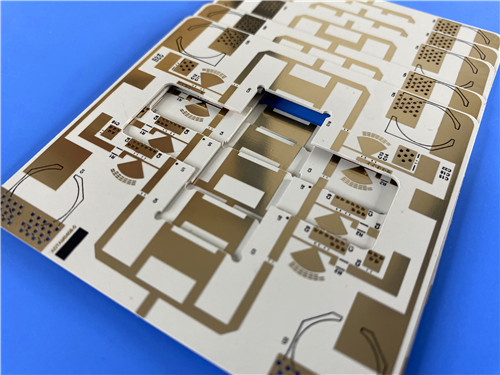
Casestudy maatwerk-PCB: High-Dk TP440 voor geminiaturiseerde antenne- en lucht- en ruimtevaarttoepassingen
Hallo, ik ben Sally. Vandaag presenteer ik een fascinerende maatwerk-PCB die gebruikmaakt van Wangling TP440 — een uniek thermoplastisch hoogfrequentiemateriaal — voor veeleisende toepassingen in de lucht- en ruimtevaart en geminiaturiseerde antennes.
Deze maatwerk-PCB maakt gebruik van Wangling TP440, een keramisch gevuld thermoplastisch PPO (polyfenyleenoxide) met een diëlektrische constante van 4,4. In tegenstelling tot traditionele PTFE-materialen bevat TP440 geen glasvezelversterking, wat zorgt voor een uitzonderlijke dimensionale stabiliteit en nauwkeurige Dk-controle. Het is ideaal voor GPS-antennes, raketsystemen, ontstekers en andere lucht- en ruimtevaarttoepassingen die stralingsbestendigheid en lage ontgassing vereisen.
Belangrijkste punten
- Materiaal: Wangling TP440 keramisch gevuld thermoplastisch PPO (Dk 4,4)
- Belangrijkste voordeel: Geen glasvezelversterking, nauwkeurige Dk-controle, stralingsbestendigheid
- Afmetingen printplaat: 45,63 mm x 97,01 mm
- Opbouw: Dubbelzijdig zonder soldeermasker aan beide zijden, alleen zwarte zeefdruk op de bovenzijde
- Uniek kenmerk: Slechts 1 net in het ontwerp — zeer gespecialiseerde toepassing met één enkel circuit
- Kwaliteit: IPC-klasse 2 met 100% elektrische tests
De klant had een hoogfrequentie-PCB nodig voor een bedrijfskritische lucht- en ruimtevaarttoepassing — waarschijnlijk een GPS-antenne, ontsteker of raketsysteem. De eisen waren streng: stralingsbestendigheid, lage ontgassing, stabiele elektrische prestaties bij extreme temperaturen en een compacte vormfactor. Traditionele PTFE-materialen met glasvezelversterking konden niet de vereiste dimensionale stabiliteit en stralingsbestendigheid bieden.
Geen glasvezelversterking
In tegenstelling tot traditionele PTFE-laminaten gebruikt TP440 geen glasvezeldoek. De diëlektrische laag bestaat uitsluitend uit keramiek en PPO-hars. Dit elimineert het "glasvezeleffect" dat microvariaties in de diëlektrische constante kan veroorzaken, wat zorgt voor een superieure signaalconsistentie.
Nauwkeurige diëlektrische constante (Dk = 4,4)
Bij de TP-serie kunnen Dk-waarden van 3 tot 25 nauwkeurig worden afgestemd door de verhouding tussen keramiek en hars aan te passen. Voor dit ontwerp biedt Dk 4,4 een optimale balans tussen miniaturisatie en signaalintegriteit.
Stralingsbestendigheid en lage ontgassing
Deze eigenschappen zijn cruciaal voor ruimtevaart- en luchtvaarttoepassingen. Het materiaal behoudt zijn elektrische prestaties zelfs in omgevingen met hoge straling, met minimale ontgassing om vervuiling van gevoelige optica of elektronica te voorkomen.
Uitstekende temperatuurstabiliteit
Het materiaal presteert betrouwbaar van -100°C tot +150°C, met minimale variatie in elektrische prestaties over het gehele bedrijfstemperatuurbereik.
Bewerkbaarheid
In tegenstelling tot keramische substraten (die vacuümcoating vereisen en moeilijk te bewerken zijn), kan TP440 worden verwerkt met standaard PCB-productietechnieken — boren, frezen, knippen en etsen.
Specificaties van de printplaat
| Kenmerk |
Specificatie |
| Afmetingen |
45,63 mm x 97,01 mm (±0,15 mm) |
| Aantal lagen |
Dubbelzijdig |
| Stackup |
35μm Cu / 1,5 mm TP440 / 35μm Cu |
| Eindlaagdikte |
1,6 mm |
| Trace/Space (Spoorbreedte/Ruimte) |
5/8 mils |
| Min. boordiameter |
0,3 mm |
| Oppervlakteafwerking |
Immersiegoud (ENIG) |
| Soldeermasker |
Geen (beide zijden) |
| Zeefdruk |
Zwart (alleen bovenzijde) |
| Testen |
100% elektrisch |
| Standaard |
IPC-klasse 2 |
Ontwerpstatistieken
| Statistiek |
Waarde |
| Componenten |
24 |
| Totaal aantal pads |
19 |
| Through-hole pads |
11 |
| Top SMT-pads |
8 |
| Via's |
28 |
| Nets |
1 |
Het ontwerp met één enkel net is hier de meest opvallende statistiek. Een 1-net-circuit is uiterst gespecialiseerd — het vertegenwoordigt een enkel geleidend pad, meestal een transmissielijn, antennevoeding of eenvoudig passief netwerk. Dit bevestigt dat de toepassing waarschijnlijk een zeer gespecialiseerde RF-component is.
Ontwerpkeuzes: Speciaal gebouwd voor de lucht- en ruimtevaart
Geen soldeermasker (beide zijden)
Het ontbreken van een soldeermasker elimineert elk potentieel diëlektrisch verlies of ontgassing als gevolg van maskermaterialen — cruciaal voor lucht- en ruimtevaarttoepassingen waar elke variabele moet worden beheerst.
Zwarte zeefdruk (alleen bovenzijde)
Zwarte zeefdruk biedt een uitstekend contrast voor componentidentificatie en zorgt tegelijkertijd voor een professionele uitstraling.
Immersiegoud-afwerking
Biedt een vlak, soldeerbaar oppervlak met uitstekende corrosiebestendigheid en geschiktheid voor wire-bonding.
1,6 mm afgewerkte dikte
De dikkere plaat biedt mechanische robuustheid voor lucht- en ruimtevaarttoepassingen waar weerstand tegen trillingen en schokken cruciaal is.
Vergelijking: hoe TP440 zich verhoudt
| Eigenschap |
TP440 |
Standaard PTFE |
Keramisch substraat |
| Dk |
4,4 (aanpasbaar) |
2,2–10 |
Varieert |
| Glasvezel |
Nee |
Meestal wel |
Nee |
| Stralingsbestendigheid |
Uitstekend |
Matig |
Uitstekend |
| Ontgassing |
Laag |
Laag |
Zeer laag |
| Bewerkbaarheid |
Uitstekend |
Goed |
Slecht |
| Max. bedrijfstemperatuur |
150°C |
150–260°C |
>300°C |
Waarom dit belangrijk is: TP440 biedt de stralingsbestendigheid en lage ontgassing van keramische substraten in combinatie met de bewerkbaarheid van PTFE. De glasvezelvrije constructie zorgt voor een uitzonderlijke Dk-uniformiteit.
Ideale toepassingen
- GPS-antennes die stabiele prestaties vereisen in ruimteomgevingen
- Raketsystemen die schok- en stralingsbestendigheid vereisen
- Ontstekers die compacte, betrouwbare RF-circuits vereisen
- Geminiaturiseerde antennes voor lucht-, ruimtevaart- en defensietoepassingen
- Beidou-navigatiesatellietsystemen
V: Wat maakt TP440 anders dan PTFE-materialen?
A: TP440 maakt geen gebruik van glasvezelversterking — het diëlektricum bestaat volledig uit keramiek en PPO-hars. Dit elimineert Dk-variaties veroorzaakt door het glasvezelweefsel en zorgt voor een superieure dimensionale stabiliteit.
V: Waarom heeft dit ontwerp slechts 1 net?
A: Een 1-net-ontwerp vertegenwoordigt een enkel geleidend pad, zoals een antennevoedingslijn, een eenvoudige transmissielijn of een passief RF-netwerk. Dit is typerend voor zeer gespecialiseerde RF-componenten.
V: Wat betekent "stralingsbestendig"?
A: Het materiaal behoudt zijn elektrische en mechanische eigenschappen bij blootstelling aan straling (zoals in de ruimte of in nucleaire omgevingen). Dit is van cruciaal belang voor lucht- en ruimtevaarttoepassingen.
V: Waarom TP440 gebruiken in plaats van een keramisch substraat?
A: TP440 biedt vergelijkbare elektrische en stralingsbestendige eigenschappen, maar is veel gemakkelijker te bewerken en te verwerken met standaard PCB-productiemethoden. Keramische substraten vereisen gespecialiseerde bewerkingen zoals laserboren en vacuümcoating.
V: Wat is de betekenis van de 28 via's bij een ontwerp met 1 net?
A: Het grote aantal via's duidt waarschijnlijk op uitgebreide aardingsstructuren, waardoor een goed gedefinieerd aardvlak of afscherming voor het enkele signaalpad ontstaat.
V: Is dit materiaal geschikt voor ruimtetoepassingen?
A: Ja. De lage ontgassing en stralingsbestendigheid maken TP440 een uitstekende keuze voor ruimtevaart- en luchtvaartomgevingen.
Tot slot
De unieke combinatie van eigenschappen van Wangling TP440 — glasvezelvrije constructie, nauwkeurige Dk-controle, stralingsbestendigheid en uitstekende bewerkbaarheid — maakt het een uitstekende keuze voor veeleisende lucht-, ruimtevaart- en defensietoepassingen. Of u nu GPS-antennes, raketsystemen of compacte RF-modules ontwerpt, dit materiaal levert de betrouwbaarheid en prestaties die u nodig hebt.
Heeft u een lucht-, ruimtevaart- of antenneproject in gedachten? Ik hoor er graag over.
— Sally


 Uw bericht moet tussen de 20-3.000 tekens bevatten!